Ambulance chasing
The RainmakerAmbulance chasing is the pursuit of clients at hospitals and accident or disaster scenes, often before they have had time to consider whether they want a lawyer. In The Rainmaker, it is not an abstract ethical problem: Deck Shifflet shows Rudy Baylor how to turn accident reports into signed contingency-fee agreements, while Rudy’s reluctance exposes the human cost of treating injury and grief as opportunities for business. The practice is presented as familiar, competitive, and difficult to separate from a legal market in which lawyers hunt for clients and vulnerable people may have little access to advice.
The Business of Finding Clients
Deck Shifflet describes a systematic source of prospects at J. Lyman Stone’s law firm. Bruiser Stone’s contacts at the Memphis Police Department pass along accident reports, sometimes almost every morning. Associates are expected to find the injured people named in them, develop the cases, and earn a share of the fees. Deck Shifflet explains that the firm’s associates generally find their own clients and keep a third of the gross; in his account, getting a case is part of the job rather than an exceptional undertaking.
Finding a hospitalized person can involve deception. Deck Shifflet instructs Rudy Baylor to call the injured person’s home and claim to be with a rescue division, so that whoever answers will identify the hospital. He uses this method himself, obtains Dan Van Landel’s room number at St. Peter’s Charity Hospital, and leads Rudy Baylor there. Deck Shifflet’s access card identifies him as a physician, allowing them to park in a doctors’ lot. These details make the solicitation feel organized and practiced: police contacts supply names, a misleading call supplies a location, and a hospital visit brings the prospect within reach.
The financial incentive is reinforced by the firm’s informal structure. Deck Shifflet says he can make a substantial living practicing without a license and has to remain at the firm at least until he passes the bar exam. He describes a workplace where lawyers find and develop their own clients, and where associates may move on after building contacts. His example of a young burn victim, approached in a hospital cafeteria and later associated with a two-million-dollar settlement, makes the prospect of a large fee tangible. The client ultimately dismissed Bruiser Stone and hired another lawyer, a reminder that recruitment does not guarantee lasting control of a case.
The Hospital Approach
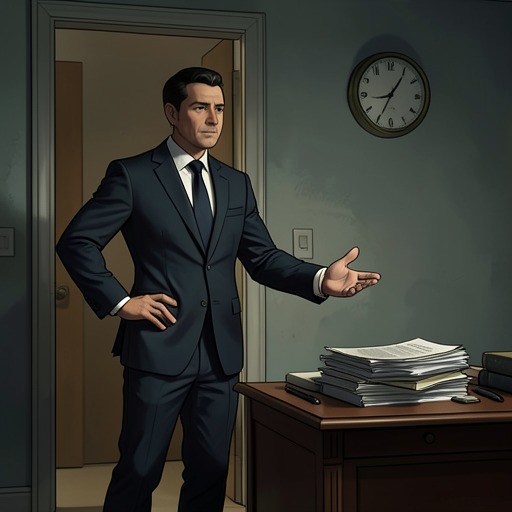
Dan Van Landel is approached in a semiprivate hospital room, without advance notice. Deck Shifflet presents himself confidently as associated with J. Lyman Stone’s firm, says the accident report indicates a clear case, and urges Van Landel not to speak to insurers or sign documents without consulting him. He says the firm needs authorization quickly and presents a short, one-page contract. Van Landel, injured and asking whether his wife can be present, has little opportunity to weigh the decision before signing. The scene places the lawyer’s procedural fluency beside the client’s immediate vulnerability.
Rudy Baylor’s unease is part of the encounter, not a later gloss on it. He worries that they have no business entering the room and hopes no medical staff or family member will discover what they are doing. When he accidentally disturbs a hospital mechanism and Van Landel cries out, Rudy Baylor apologizes and becomes more anxious. Deck Shifflet, by contrast, stays composed, secures the signature, gives Van Landel a business card identifying him as a paralegal, and directs Rudy Baylor to return with further paperwork. The difference between their reactions shows how easily repeated practice can make an intrusive approach seem routine to the recruiter and alarming to the newcomer.
After they leave, Deck Shifflet argues that another lawyer would contact Van Landel soon, so the firm risks nothing by trying first. He estimates that prospects may sign up with one lawyer and later change their minds, but that clients are much more likely to stay once they have signed. The logic turns urgency into a competitive justification: a client’s chance to pause is treated as a risk that another firm will secure the case first. Deck Shifflet also instructs Rudy Baylor to call Van Landel’s wife and offer to return that evening, extending the recruitment from a bedside signature into continuing contact with the family.
Competition and Ethical Unease
The hospital scene is followed by Deck Shifflet’s practical lessons about legal work. He acknowledges that soliciting cases is unethical, yet argues that it is common and that another lawyer will do it if his firm does not. He frames the decision as marketplace competition, not as a question of whether an injured person is in a position to make an unhurried choice. Rudy Baylor’s law-school education has taught him to think in terms of professional ethics; Deck Shifflet’s experience teaches him that clients are also pursued through methods that formal instruction does not prepare him to encounter.
The novel sharpens the irony when Deck Shifflet describes lawyers who wait in hospital cafeterias to approach injured people. He speaks scornfully of that behavior while knowing the cafeterias, trauma units, and other likely locations throughout the city. He even draws Rudy Baylor a map of hospital gathering places and explains why particular times might produce prospects. The distance between his disapproval and his expertise suggests how readily a practice can be condemned in the abstract and adopted as ordinary work in the next moment.
The distinction between aggressive solicitation and the need for legal help is visible in Rudy Baylor’s dealings with Dot Black. Dot Black brings an insurance dispute to him herself, carrying Great Benefit Life Insurance Company’s paperwork and explaining that her family cannot afford much. Rudy Baylor initially plans to review the documents, consult a professor, and direct her to an experienced lawyer. Later, he advises her to sue and offers to handle the case on a contingency basis, while acknowledging that he has not yet been admitted to the bar and will need another lawyer associated with the work. Her account of waiting for the insurer to pay, and of never having used a lawyer before, shows how distrust, unfamiliarity, and limited resources can delay a claim. This is not ambulance chasing: the contrast is between pursuing a client at a moment of physical crisis and responding to a person who has come seeking assistance, even when that person has struggled to reach legal help.
That broader problem also appears in the discussion of insurance bad faith. Max Leuberg explains that only a small fraction of wrongful denials reach court, because insurers expect many policyholders to give up or avoid lawyers. The exact estimates differ in the book’s discussions, but both make the same structural point: legal remedies depend on people first finding, trusting, and being able to afford counsel. Ambulance chasing exploits one kind of vulnerability, the injured person’s immediate circumstances; the failure to pursue a claim can reflect another, the distance between formal rights and practical access to a lawyer.
The Disaster Scene and Rudy Baylor’s Refusal
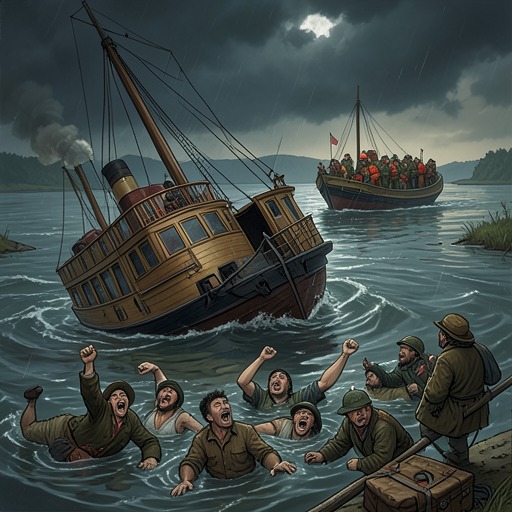
The most disturbing instance occurs after a Memphis prom riverboat sinks. Families and friends gather along the river as rescuers search for bodies; police identify one victim, and the people waiting for news remain caught between grief and hope. In that setting, men with business cards move toward bereaved families and friends, seeking legal work. The timing makes the transaction stark: the potential clients have just received or are awaiting news of death, while the solicitors compete for cases and fees.
Deck Shifflet recognizes the opportunity before Rudy Baylor does and signals him to move closer to the families. Rudy Baylor refuses. Deck Shifflet slips into the crowd and disappears to pursue clients, while Rudy Baylor turns away from the river and runs through downtown Memphis. The contrast is not a general rejection of legal representation for disaster victims; the scene shows instead that Rudy Baylor will not initiate that representation at the point of acute bereavement. His refusal gives his earlier discomfort in Van Landel’s hospital room a consequential edge: the pressure to compete does not erase his ability to decline.
Meaning in the Novel
Ambulance chasing links professional ethics to the material conditions of legal work. Deck Shifflet’s methods are not presented as an isolated aberration: accident reports, hospital routines, contingency fees, and competition among firms make solicitation part of a repeatable business process. His confidence rests on the expectation that other lawyers will do the same. Yet the encounters themselves are particular and unequal: a patient is approached in a hospital bed, or a family is approached while waiting for news beside a river.
The contrast with Dot Black’s case keeps the critique from becoming a simple condemnation of lawyers seeking clients. People who have been denied treatment or payment may need a lawyer to make a legal right usable, and many do not seek one promptly. The novel therefore holds two truths in tension: access to representation matters, but the pursuit of clients can take advantage of the very vulnerability that makes representation necessary. Rudy Baylor’s hesitation, his eventual work for Dot Black, and his refusal at the disaster scene mark different choices within that tension, rather than a claim that every method of finding a client is ethically equivalent.